





Global

Bringing Our Expertise and Philosophy into 3D Space
— EBARA-D3

Passing down tacit knowledge and skills through technology


EBARA Corporation is advancing a new manufacturing digital transformation (DX) project, “EBARA-D3,” to address critical industry challenges such as skill transfer and person-dependent tasks. Based on the “Digital Triplet (D3)” (*1) concept—which recreates business-related knowledge, technologies, skills, and philosophy within a metaverse—this unique EBARA initiative has already entered the pilot phase at the Fujisawa Plant.

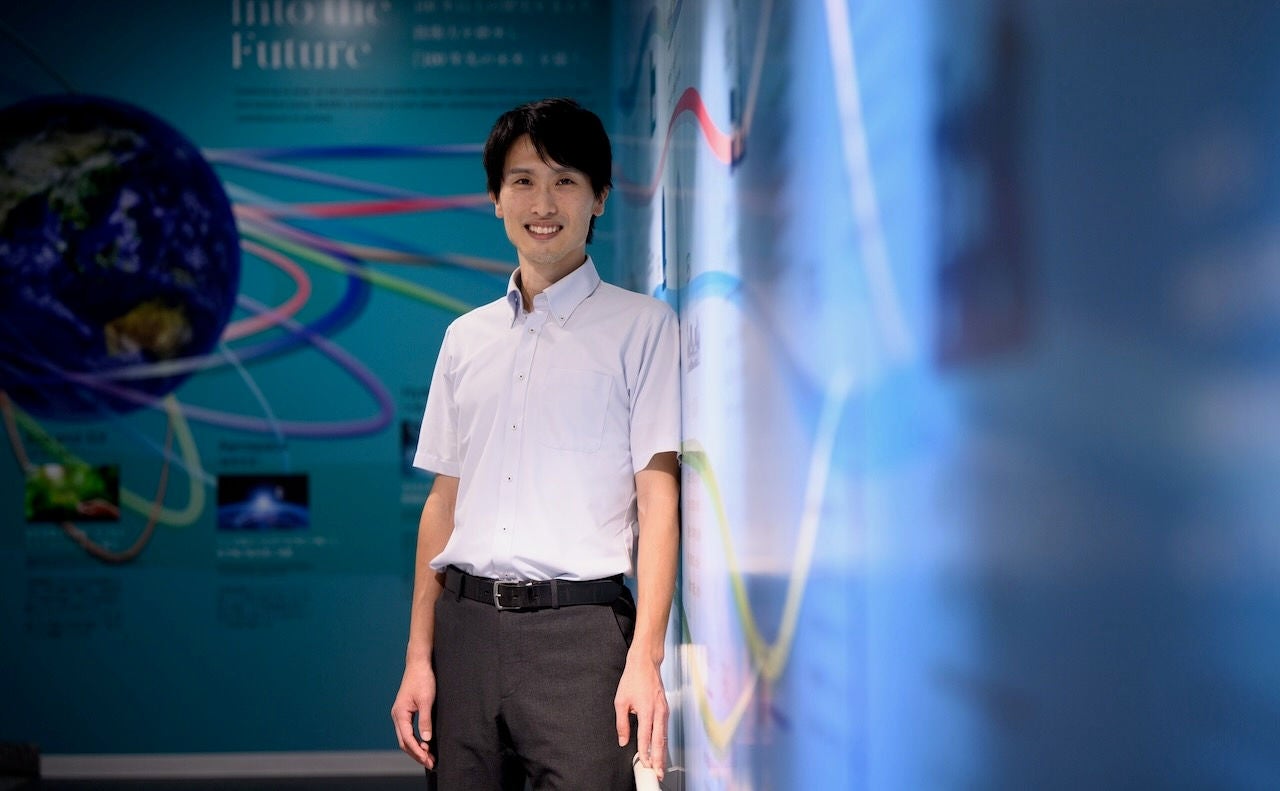
Keisuke Kawashima, Tsuyoshi Higashinakagawa, and Miki Takahashi from the Digital Creative & Transformation Group (*2) discussed the project's details.

*1 A concept in which expertise and tacit knowledge of field engineers are added to digital twins (a virtual model of physical products and equipment). By digitizing and sharing human experience, judgment, and problem-solving know-how, unavailable in conventional digital twins, Digital Triplet facilitates realistic simulations and improvement activities on the shop floor via cyberspace.

*2 A group within the Data Strategy Team that drives EBARA’s business transformation and growth. It promotes DX for existing businesses and supports the new business development by leveraging data and technologies in collaboration with business side.
A shop floor revolution synergizing “human expertise” and technology

―What kind of “EBARA-D3 Project” are you working on?
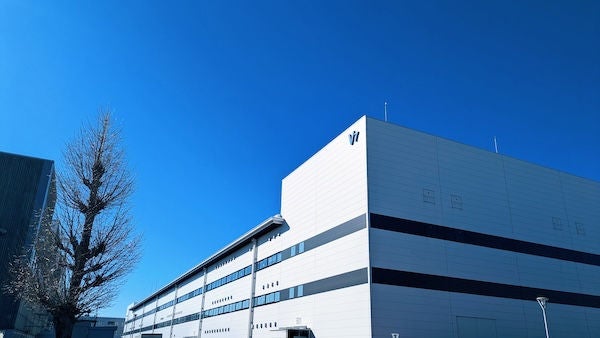
Fujisawa Plant that has launched a pilot for EBARA-D3

Kawashima: The challenges at the shop floor aren't just operating machines. It is the human expertise and intuition, which are demonstrated in daily judgment, fine-tuning, and response to changes, that truly support quality and safety. The EBARA-D3 is a project to build a “knowledge cycle” designed to capture human expertise, extract it through technology, systematize it, and reintegrate it into on the shop floor.

At the core are Beyondverse, a 3D knowledge space powered by digital twin technology, and DOJO (*3), a system for skill transfer. Beyondverse reproduces and visualizes expertise behind operation, equipment, and judgment in 3D, and promotes knowledge sharing and standardization.

Higashinakagawa: DOJO, on the other hand, accumulates the skills and judgment criteria of skilled worker as explicit knowledge, and supports human resource development while visualizing proficiency levels. By linking both systems, knowledge is accumulated as an educational resource to drive evolution of the working place.

Takahashi: Furthermore, technologies such as AI and IoT are also being used to make the most of “human capability” based on the idea of human-centered design.

*3 “DOJO” is our internal name.

Beyondverse―unleashing on-site knowledge into the future by reproducing the entire shop floor

-- Please tell us more about Beyondverse and DOJO. First, what kind of elements does Beyondverse reproduce and visualized three-dimensionally?

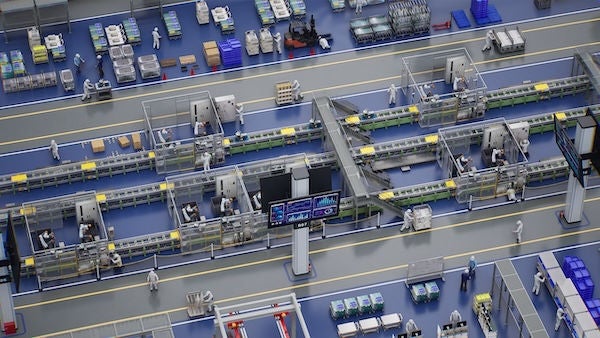
Kawashima: Beyondverse not only faithfully reproduces physical elements such as production line configurations, work flow lines, and equipment layouts, but also incorporates human judgment and tacit expertise developed through hands-on work and integrates them into a virtual space.

Higashinakagawa: Remarkable point is that it does not only reproduce the behavior of things, but also visualizes the alignments of people, things, and processes. This visualizes how the decision was made by each worker and, where the strain and bottleneck were placed in the process.

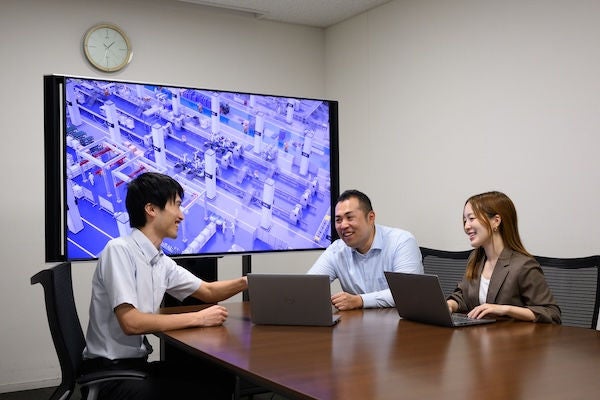
Three-dimensional reproduction and visualization of the factory with Beyondverse

Takahashi: This space will function as an “interface for expertise” that paves the way for future of the manufacturing facility. It is now possible to simulate and derive solutions for issues that may arise on physical shop floors in advance, including equipment modernization, work optimization, and contingency verification for abnormal occurrences.

A mechanism that captures the “now” with data and returns it to the future

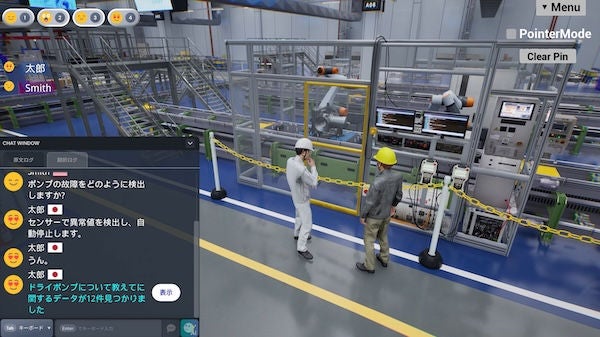
Real-time translation enables seamless communication with engineers at global bases.

Kawashima: The characteristic of Beyondverse is that real-time data from sensors and IoT devices is poured into a 3D space to visualize the “now” of the shop floor. By analyzing aggregated data, such as temperature, vibration, pressure, and operating state, we can detect signs of equipment failure and workload fluctuations, enabling proactive alerts and informed maintenance decisions.

Importantly, it's not just an automated system. This data provides the shop floor with “insights” and a reliable basis for judgment. The intuitive design of the Beyondverse user interface allows anyone to access necessary information quickly and effortlessly. This has been prepared as a “foundation for utilizing human capability.”

-- Have there actually been any examples where this mechanism was used for on-site simulations?

Kawashima: Right. We have already used Beyondverse to simulate AGV (*4) implementation, proving highly effective for verifying route design and operational efficiency. In addition, we are developing a system to acquire real-time operational test data from dry pumps, providing immediate feedback for on-site decision-making. Furthermore, Beyondverse’s real-time translation feature enables seamless communication with overseas engineers, allowing us to share expertise beyond language barriers.

*4 Abbreviation for Automated Guided Vehicle. An autonomous vehicle used to transport materials, parts, and finished products within factories or warehouses.

Knowledge cycle driven by “DOJO”

-- What kind of system is DOJO?

Higashinakagawa: It is a system responsible for skill succession and learning support, and it can be said that it changes skilled knowledge into formal knowledge, leading to human resource development and field evolution.

We will structure the intuition, judgment criteria, and tacit technical knowledge that is difficult to verbalize in the field from videos, procedures, interviews, etc., and leave them as educational assets. It is structured so that not only does it simply show “how to do it,” but it also allows you to understand “why they do it.”

Furthermore, at DOJO, work logs are analyzed to visualize the proficiency level and trends of each worker. You can identify tasks you are not good at and recommend the most suitable teaching materials. This increases the speed and accuracy of training. Additionally, applications within DOJO are being designed so that technical evaluations can also be performed, and the results can be used for personnel evaluations, while also helping enhance employees’ motivation and sense of growth.

The knowledge accumulated in this way is linked to Beyondverse and utilized for work simulations in 3D space and sharing of field know-how. DOJO supports “human learning,” and Beyondverse supports “spatial reproduction,” and when these two wheels mesh, a cycle of “knowledge born in the field” → “education” → “practice” → “evolution” starts moving.

Designing future sites based on the movements of each person

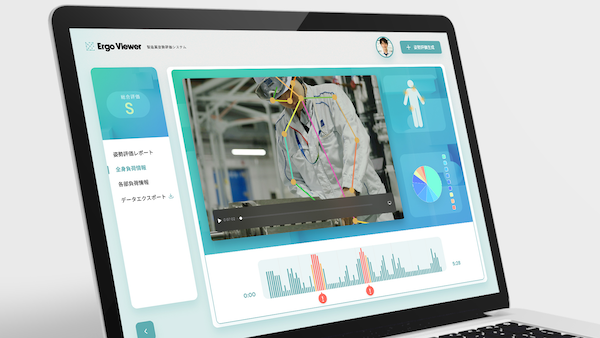
Takahashi: We are currently developing a work attitude evaluation app using DOJO. By quantifying work postures, we aim to visualize physical loads that often goes unnoticed, leading to improvements. By accumulating this data, we believe that it will eventually help minimize physical load bias and enhance overall work efficiency.

Furthermore, we are planning to feed data from monitoring cameras at each EBARA site into Beyondverse, starting with the Fujisawa Plant. This makes it possible not only to store footage, but also to incorporate proactive safety functions, such as detecting falls or unauthorized entry into hazardous areas and triggering instant alerts.

“Ergo Viewer” shown in the photo is an in-house tool developed by EBARA Corporation.

Additionally, by collecting worker movement data, we are also exploring objective analysis of traffic patterns on the shop floor. By clarifying redundant movements and waste, we can identify areas for improvement, which should ultimately lead to a direct increase in productivity.

The accumulation of these efforts will be the foundation for creating safer, more efficient, and more comfortable manufacturing sites. We want to capture invisible loads and waste with data and change the future of the shop floor to better ones.

What value does “human-centered design” bring

-- At the beginning, there was a phrase called “the idea of human-centered design.” Please tell us specifically what it means.
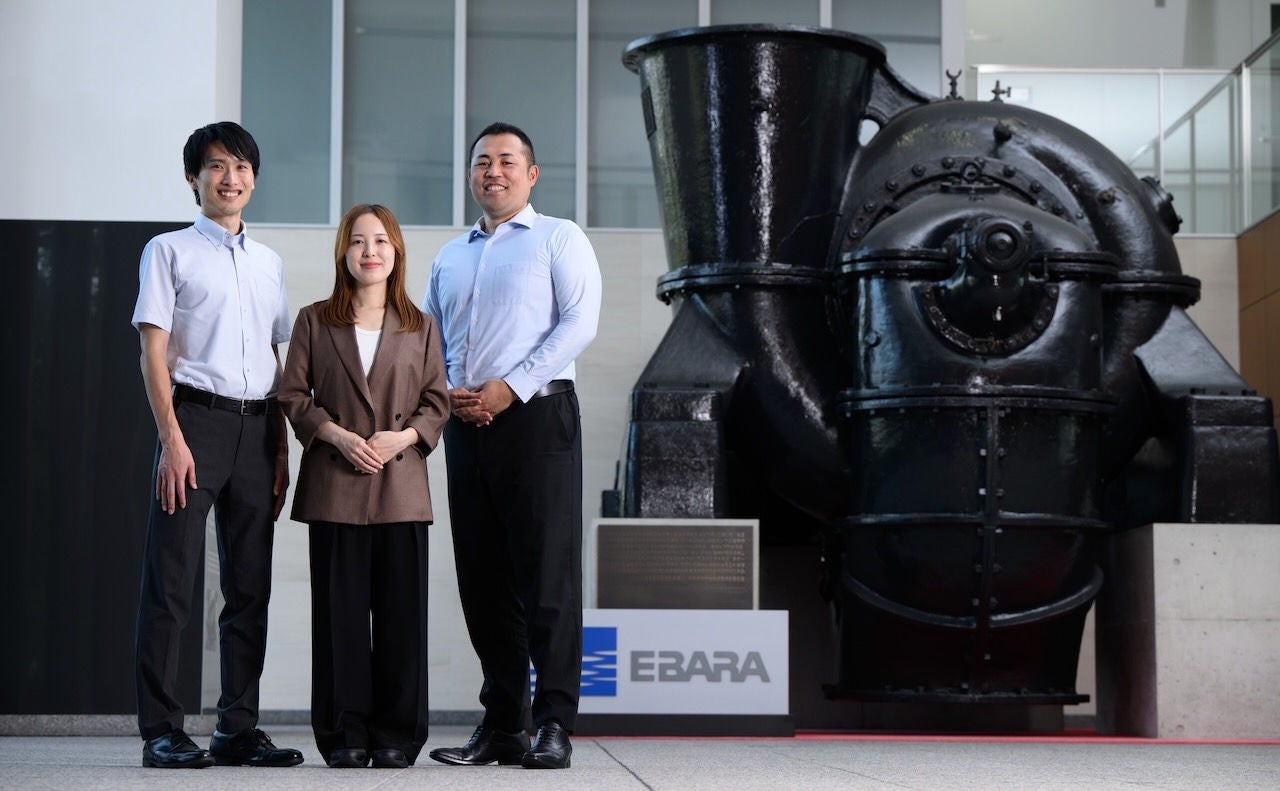
(From left) Kawashima, Higashinakagawa, and Takahashi involved in development

Kawashima: It is technology adapted to the shop floor that truly empower it. Simply introducing a new system provides little value on its own. True value emerges only when it is fully embraced by the shop floor, leading to meaningful changes in behavior.

EBARA-D3 emphasizes this assumption and incorporates the idea of “human-centered design” into all technical designs. For example, the UI (*5) is designed to be as simply as possible, ensuring intuitive operation without hesitation. Data analysis results are visualized to ensure they are intuitive and easily understood, even without specialized knowledge. Educational content is designed to deepen intuitive and experiential understanding by incorporating the insights and physical movements of skilled worker.

All mechanisms are designed starting from “who uses it, and how.” This is why technology takes root on the shop floor, support people, and ultimately strengthens the capabilities of the entire organization. Looking ahead, we plan to implement this system across EBARA's global operations and eventually offer it to the wider market outside the company.

*5 Abbreviation for User Interface. UI encompasses everything the user sees and interacts with, including the intuitive layout of menus and the ease of operating buttons.