







Global

Taking Innovative Pumps Global with a Newly Adopted Technology
―Overcoming the Dual Barriers of Development Time and Cost

Incremental Forming: The Key to Surmounting Challenges in Both Development Time and Cost


EBARA Corporation has set the goal of "delivering water to 600 million people around the world". The pumps designed for the overseas market are key for achieving this goal. We investigated the initiatives to accelerate their development cycle and create even more innovative products. "Prototyping" is an essential process of product development. How can we overcome the time and cost barriers for prototyping?

In response to these issues, EBARA has been exploring "sequential molding", a technology to create parts without molds, for the product development of pumps targeting overseas markets. This initiative is in collaboration with the Ebara Manufacturing Technology Advanced Center (EMTAC), a team that supports “monozukuri” (manufacturing) throughout EBARA Group.

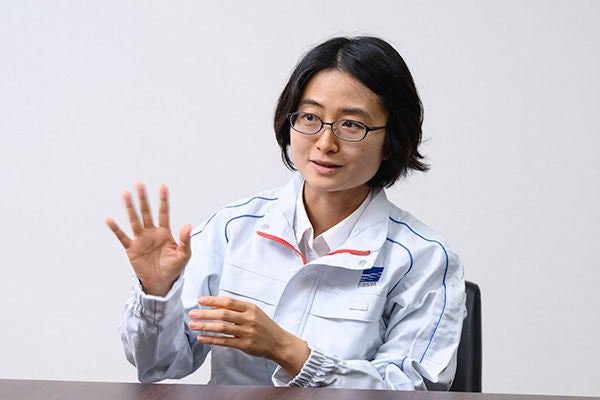
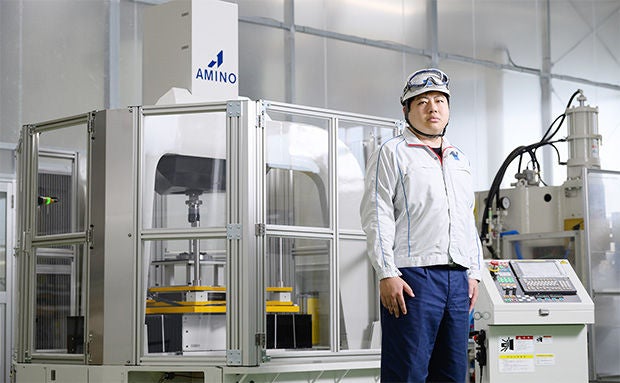
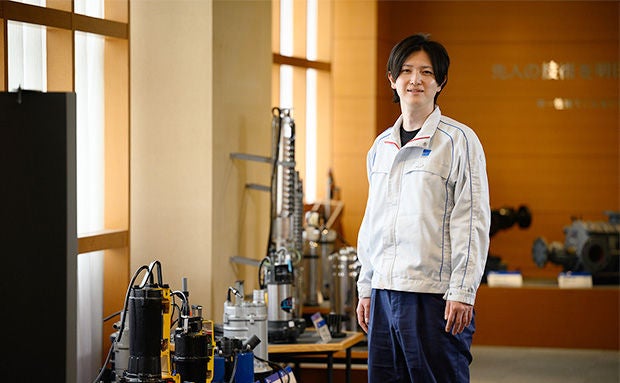
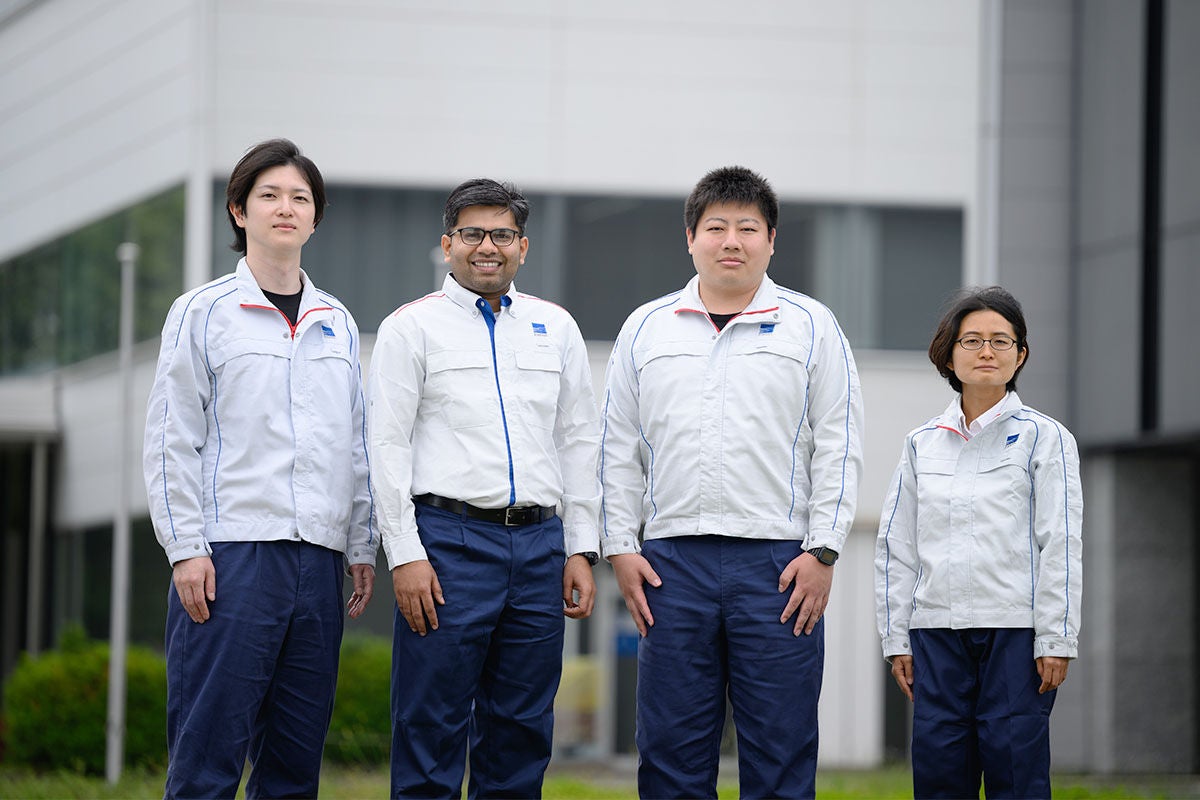
Keisuke Hibino and Miho Isono of the Press Team of the Prototype and Base Collaboration Promotion Division of the Manufacturing Technology Development Department of the Production Process Innovation and Quality Assurance Department, who are members of EMTAC, and Kenta Tokairin and Chinchansure Mallinath of the Global Pump Development Division of the Overseas Business Development Department of the Building Service & Industrial Company in charge of the development of pumps for overseas markets discussed the contents of the discussion.
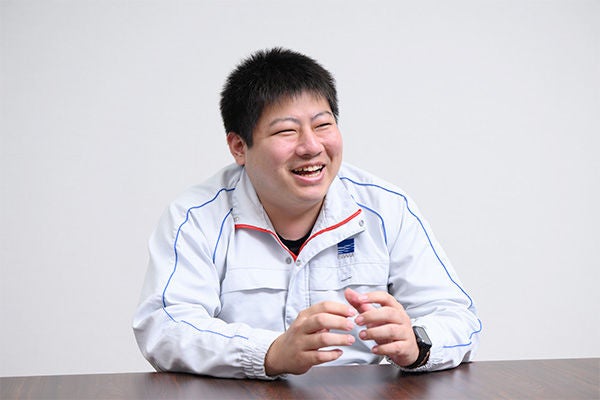
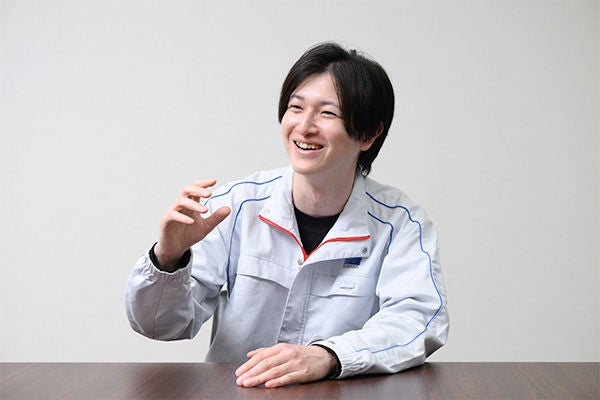
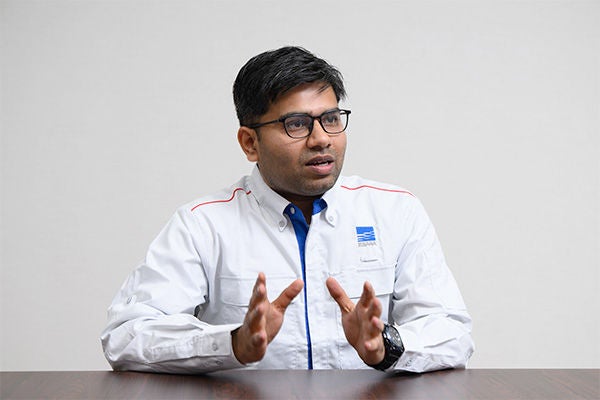
The Challenge of "Generating Challenging Ideas"

―― What kind of initiatives did you make in the development of the pump this time?

Tokairin:To develop a new pump, there are processes such as design, prototyping, and testing. We design a new product, create a prototype based on that design, and test the prototype to verify whether it has the required performance. Among these steps, this initiative aimed to solve the challenges in the prototyping phase.

When manufacturing stainless steel pumps, there is a process called "pressing" where a specialized die is made and pressed against the metal to form the part. It is not uncommon for a mold to cost several million yen, and the manufacturing period is generally about 3 to 4 months. There is no problem if the product has already been decided to be sold, but it is not ideal to make a die that requires significant cost and time just to produce a prototype. This prevents us from conducting trial and error, and makes it difficult to come up with challenging ideas. It started when we consulted with EMTAC to see if there was a way to make a prototype faster and at a lower cost.

Hibino:EMTAC produces prototypes required by each business division and accumulates know-how in various technologies. This background led to the current consultation.

In response to the challenge raised by Mr. Tokairin, EMTAC proposed the use of a technology called Incremental Forming. This is a technology that processes metal sheets into a desired shape by gradually deforming them using a machine, without the need for a specialized die. Because it does not require a die, it is also known as Die-less Forming, which greatly reduces both cost and production lead time. ​

While there has been no case of Incremental Forming being used in EBARA before, we had been investigating this technology for a long time. Therefore, on this occasion, we proposed using it for pump prototyping. This was the first case for us to utilize Incremental Forming.

Keisuke Hibino
Production Process Innovation and Quality Assurance Management Department, Manufacturing Technology Development Department, Prototyping and Base Collaboration Promotion Division, Press Team

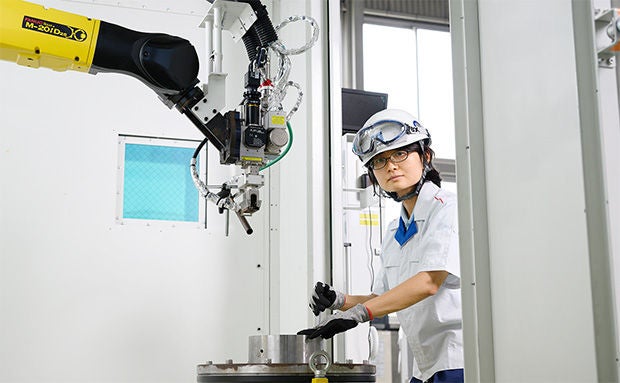
Isono:At the same time, the prototyping process also requires a post-process to join the parts created using Incremental Forming. As my expertise at EMTAC is in laser welding technology, I was also considering leveraging this technique to address the post-processing requirements. EMTAC's strength lies in having a range of technologies to handle a series of manufacturing processes, which allows us to approach the matter from a comprehensive perspective.

The Daily Dialogues among Four Familiar Faces via Chat

Mallinath:After that, we actually made parts using Incremental Forming, and conducted testing to verify the quality. We meticulously checked whether this new technology could manufacture prototypes with design-level accuracy (Negligible deviation accuracy from the design). This is because, in the development of pump products, the product must comply with the standards set by each country to be launched in that market. We design based on that standard.

The advantage of pressing with a die is its ability to achieve forming with minimal deviation from the design. We proceeded to confirm what the finish would be like with Incremental Forming by inspecting the finished parts. We communicated daily via chat.

Kenta Tokairin
Building Service & Industrial Company, Development Management Department, Overseas Business Development Department, Global Pump Development Division 

Tokairin:Ms. Isono and I used to be in the same department, and Mr. Hibino and Mr. Mallinath joined the company at the same time. Because of that relationship, we were able to discuss it without hesitation.

Hibino:As an aside,when we joined the company in 2018, I remember being surprised that Mr. Mallinath spoke almost entirely in English as he had just arrived in Japan. Yet, after a year, he was already proficient in Japanese.

―― What was your impression of the parts made using Incremental Forming?

Tokairin:First of all, I was surprised that I could manufacture parts like this without using a die. Achieving the same level of accurate forming as pressing still requires various kinds of know-how, but realizing this will significantly change product development, I believe.

Hibino:Even now, our know-how of Incremental Forming is being steadily accumulated, which is making highly complex forming possible. On the other hand, while advancing this initiative, the value and advantages of conventional die pressing have also been reaffirmed. Considering these factors, I also believe it is important to appropriately differentiate the usage of Incremental Forming and pressing.

Deliver to Customers Faster

―― Could you share the results of this initiative and your goals for the future?
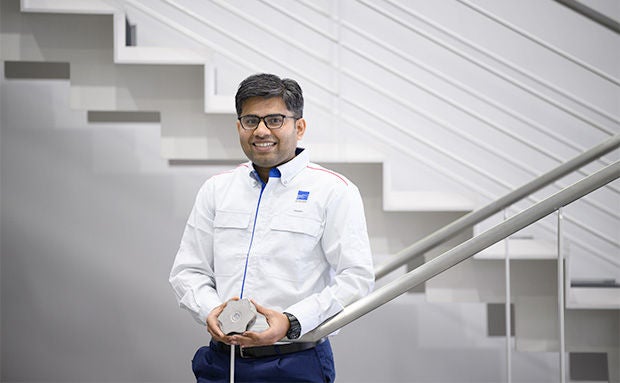
​Chinchansure​.Mallinath
Building Service & Industrial Company, Development Management Department, Overseas Business Development Department, Global Pump Development Division

Mallinath:Generally, it takes 1 to 3 years to complete development of a series of pump products. Among them, the most time-consuming part is prototyping and the subsequent performance evaluation, so if we can shorten this portion using Incremental Forming, we can launch products to the market faster and respond quickly to customer needs. Expectations are high, and I would definitely like to utilize this technology for prototyping new product development in the future.

Tokairin:Of the three development processes we talked about at the beginning, we can speed up the design phase ourselves, but reducing the time related to prototyping afterward is beyond our control alone. I would like to continue pursuing this theme together with EMTAC.

Hibino:Currently, if we use Incremental Forming, a prototype can be completed in about one month. It would be nice if we could shorten that period to 10 days eventually. It's just a goal, but I don't think it's a dream.

Isono:In line with the speed increase achieved by Incremental Forming, I want to be able to proceed at the same pace in the laser welding process I am responsible for. Laser welding itself can be done quickly, but we would like to shorten the production time of the necessary jigs (auxiliary tools for welding and other mechanical work).

Miho Isono
Production Process Innovation and Quality Assurance Management Department, Manufacturing Technology Development Department, Prototyping and Base Collaboration Promotion Division, Press Team

Hibino:I hope we can accumulate know-how not only about one technology, including laser welding, but also about the connection between the upstream and downstream processes, and support the people in the field.

Mallinath:I believe that creating prototypes with our in-house organization, EMTAC, will also lead to improved development quality. In the past, we sometimes outsourced prototype manufacturing, but working internally is easier for communication. This is because, in-house, we all understand EBARA's products and our internal terminology. It also makes it easier to reach out to them. As a result, it will be easier to communicate prototype requirements, which will lead to improved quality.

Tokairin:I hope that EMTAC will facilitate the sharing of the “monozukuri” (manufacturing) knowledge across the entire EBARA Group. It is unavoidable that opportunities for communication outside of one's own business company become limited, but having EMTAC act as a cross-organizational link will make information from other business units more accessible. In fact, there should be cases where the technology used in other fields can also be leveraged for pumps. We certainly hope to continue consulting with you on various issues in the future.